
Published by Sommersdale, 2021, 335 pages
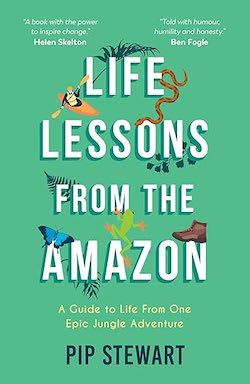
Pip Stewart and two of her friends spent nearly three months in the wilderness in Guyana, hiking through the rainforest to the source of the Essequibo River and then kayaking the 1,014 kilometres of the river to the point where it meets the Atlantic Ocean.
The headwaters of the Essequibo and 625,000 hectares of pristine forest are protected by the Masakenari community, and the women had to get their permission for the journey. The Masakenari not only agreed but helped them. (The author fee from this book goes to the community and the Drugs for Neglected Diseases initiative.)
The group sets off from the village of Masakenari with guides from the Waî Waî community. The guides not only help them navigate the jungle, but give them advice on important survival tactics, such as what to do when faced with a jaguar (don’t run, fight), and the importance of always taking your machete with you, including when going to the loo.
The hike is harder than the three women imagined—it is not only physically demanding, but there are poisonous spiders as big as a hand, not to mention prowling jaguars and anacondas. The women work with their guides to hack their way through the jungle, clear dead logs from the river, and catch fish. As this is something most visitors do not do, it creates a bond with their guide.
Once they have located the source of the Essequibo, the river trip begins, bringing more adventures. The women manoeuvre their way through white water and waterfalls; a six-foot green anaconda dives into the water from a branch in front of them (rather worrying, as they can stay submerged for 10 minutes and are good hunters); and Stewart is stalked by a caiman as she washes pots by the riverside. She also learns that it is not wise to go into the water during menstruation as it could attract the piranha.
Throughout the book, I felt I was there with the group: the pain, discomfort, and the moments you want to give up but can’t. They fall sick, get trench foot from too much damp, and Steward manages to bring back a flesh-eating parasite.
Balancing out the challenges are the magical moments: a jaguar sitting on a rock, lazily watching them kayak past; Guyana’s national bird, the hoatzin, startling them with a nasal grunt; and a hummingbird drinking nectar inches away from Stewart’s face.
The trip also teaches Stewart lessons, which she shares with the reader—lessons about resilience, strength, the importance of community, and self-belief—lessons that might be useful in dealing with everyday life.
She also reflects on travel as a privileged person with the money and time to explore remote places, and the effect of tourism on pristine environments and local communities.
Nature had become home to them. After three months, they found the noise and busyness of Guyana’s capital Georgetown jarring. The rainforest, with all its dangers, had tested them almost beyond endurance but had also given them back a sense of self, a path towards inner discovery.
This review first appeared on Women on the Road.


Leave a Reply