
Published by Bloomsbury Wildlife, 2020, 272 pages
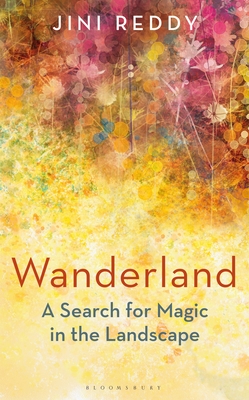
“I was…sick of the anxiety. This was no way to live, I realized if I wanted to hang on to my sanity. It was time to just do the thing that I secretly longed to do: to actively seek to enter a world that co-exists with the visible one, a world of signs and portents; and to experience this land, my home Britain, as the indigenous people I’d met in the far-flung places of my travels had experienced theirs, and to let the rest go.”
Jini Reddy was born in the UK. Her parents had moved from South Africa, and she had spent part of her childhood in Canada, so she never really felt part of the country of her birth. After a difficult decade, her instinct to connect with nature, and especially nature in Britain will help her find a way out of what she calls her “decade of despair”.
Reddy finds the World-Wide Labyrinth Locator online and decides that’s where she will start. There is a labyrinth in Cornwall on a farm above the sea cliffs. It sounds perfect, especially as Reddy has an affinity with the sea—it is where she feels happiest. And so her journey begins.
Reddy meets a British Native Shaman in Herefordshire, a tree whisperer in Cromford in the Derwent Valley, and a priestess in Glastonbury. She walks St. Michael’s Way, a pilgrimage route from near St. Ives on the North Cornwall coast to St. Michael’s Mount on the south coast—13 and a half miles, which she does in a day. She finds peace on Lindisfarne, an island off the coast of Northumberland that is cut off from the mainland at high tide when the causeway linking it is flooded.
Although her journeys do not always result in epiphanies and are sometimes disappointing, Reddy persists.
On Iona, a Scottish island, she looks for the Glen of the Temple, a place that is supposed to be magical. But locals either haven’t heard of it or give her extremely complicated directions. She almost gives up when, on her last day, she bumps into someone she knows who offers to walk with her to look for it. They find it and it is truly magical.
“The first thing I notice is the deep reservoir of silence, as physically tangible as a bird or a hill or a tree. There are no human footprints on the muddy track. The valley conveys the impression of having rarely witnessed human life. There is no tension here, no grievance or edge or chill. Nothing has jostled this valley. It is entirely at peace with itself. There is a clarity here that I have only experienced before in isolated valleys in Nepal or Pakistan. … A sparrowhawk reels overhead, as if enacting some primal ritual that it undertakes when a human actually does enter the glen.”
The characters in this book, the shamans and priestesses, have this in common: they have found a way to be closer to the natural world, to take the time to understand it in a way most of us have forgotten. Reddy reminds us we can too, without having to travel to the ends of the earth.
This review first appeared on Women on the Road.


 Women's Travel Books
Leave a comment