
Published by Santa Fe Writer’s Project, 2017, 350 pages
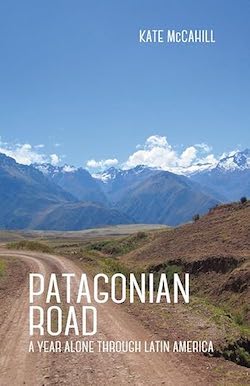
Inspired by Paul Theroux’s travel book, The Old Patagonian Express, Kate McCahill decides to take a year off and travel through Latin America. Unlike Theroux, she is determined to spend time in places rather than just pass through. Latin America is too big to see in its entirety, even in a year, so she focuses on Guatemala, El Salvador, Nicaragua, Ecuador, Peru, Bolivia and Argentina.
McCahill learns some Spanish before she leaves the US, and seems to manage well, considering that often, no one speaks English in small towns she visits. But there is still a language barrier, especially in the first half of the trip, and it prevents her from getting into detailed conversations, which is a pity. In spite of that, she does get involved with the lives of the communities she lives in, sometimes volunteering as a teacher.
In Xela, Guatemala, she takes Spanish lessons from 24-year-old Linda, who has taught people of several nationalities (and received marriage proposals from a few!). McCahill loves the market with its “pyramid-shaped cones of grain, stacks of raisins and enormous dates, baskets spilling over with oranges” and chicha, the fermented corn drink, doled out from bubbling cauldrons by “deeply wrinkled, white-haired old women”. In El Salvador, McCahill stays, inadvertently, in a brothel in Santa Ana, but enjoys San Salvador, in spite of its reputation as being crime-ridden. She loves Granada in Nicaragua and writes lyrically about it: “Just as the bells of the churches are announcing five o’clock, the wind finally lifts off the water and filters through the streets, the trees and onto the cobblestones.”
In Quito, Ecuador, she attends Easter celebrations, where people drag large crosses through the streets. In Cochas, Peru, artists show her gourds that have been intricately carved, each one telling a story. In Bolivia, she visits a silver mine in Potosi, and sees the dangerous working conditions for miners. And in Buenos Aires, she rents a room from two sisters, Alex and Vicky, older women who treat her as part of their family.
This is also a personal journey for McCahill. She leaves behind a lover in the US, whom she misses. But long-distance relationships are notoriously hard to keep, and this one does not survive. She gets through heartbreak and homesickness, especially for her Finnish grandmother. But travel can both loop in on itself and free you at the same time. She sees familiar things in places she’s never been before: a flower in a garden in Granada takes her back to her grandmother’s kitchen. “Once you visit a place,…you will find it a thousand times again”. And then there is the freedom that comes from being somewhere no one knows you.
Through the book, you witness the way she deals with some of her insecurities, and by the time she reaches her last destination, Buenos Aires, you can sense her growing self-confidence. A good recommendation to travel, if you needed one!
This review first appeared on Women on the Road.

 Women's Travel Books
Leave a comment