
Published by Dundurm Press, 2007, 240 pages
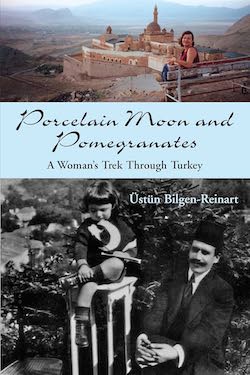
Üstün Bilgen-Reinart is a Turkish woman, who moved to Canada to study when she was 18 and stayed on. But in the late 1990s, she moved back to Turkey to spend more time with her ageing parents.
Setting out to rediscover her country, Bilgen-Reinart delves into Turkey’s history, starting with ancient times and moving forward, visiting historical sites and linking them to the present by talking to people. Her journeys include Kurdistan, Sanliurfa, the site of a series of honour killings, and brothels.
Bilgen-Reinart meets many interesting—and diverse—women. Hürü Kara, a “regal-looking elderly matron” living in a village in central Anatolia, recites poetry to her and doesn’t let her leave without a parting gift. Hacer is a young prostitute who invites Bilgen-Reinart to her home and offers her a spare bed so she won’t have to take a taxi late at night. Feride is a Kurd, a refugee because her village was burned down. There are no men left in her family, only young boys. Rahime is at the forefront of the protest against the goldmine near Bergama, which would leach cyanide into the water tables. In Sanliurfa, Sahabat, a mother, worries about keeping her daughter safe.
But one thing has stayed with me. In the Neolithic period, Anatolia—one of the oldest continually inhabited regions in the world—was the centre of the cult of Cybele, the Mother Goddess. Women were revered because they gave birth and the man’s role was unimportant (a far cry from the repressive patriarchal society of the present). There are still shrines to Cybele all over the region. Bilgen-Reinart visits the architectural dig of Çatalhöyük, the settlement of a Neolithic society that practiced equality between the sexes and where difference did not mean inferiority or superiority.
“The settlement had no fortifications and the site had never suffered war. None of the human bones found there show any evidence of a violent death. No weapons that could have been used against human beings have been discovered. A human society where war was unknown!” It is the tragedy of humankind that we have forgotten how to do this, but it is reassuring that we once did—and maybe one day still can.
This review first appeared on Women on the Road.

 Women's Travel Books
Leave a comment