
Published by W. W. Norton & Company / Granta Publications, 2014, 405 pages
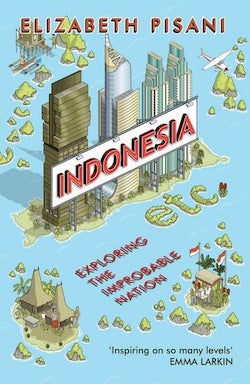
Indonesia is a complex country. It is made up of 13,466 islands with over 360 ethnic groups and 719 languages. When it gained independence from the Dutch in 1945, the declaration of independence read: “We, the people of Indonesia, hereby declare the independence of Indonesia. Matters relating to the transfer of power etc. will be executed carefully and as soon as possible.”
According to Elizabeth Pisani, “Indonesia has been working that ‘etc.’ ever since.”
Elizabeth Pisani knows Indonesia well. She was posted there as a journalist with Reuters in 1988 for three years. She returned to the country in 2001 after retraining as an epidemiologist specialising in AIDS. In 2011, she decided to write about the country. She spent a year travelling through Indonesia, trying to see what held this diverse country together. Pisani speaks fluent Indonesian, which opened doors for her. She had one golden rule: always say yes!
Pisani has a reason for this rule: she knows that planning a trip in Indonesia is fairly pointless.
Boats leave 18 hours after they’re supposed to, buses wait until they’re full before departing and tend to make detours to “drop someone at home or pick up a package from Auntie’s”. So the only way to get anywhere is to say yes when someone offers a lift. Even when she’s not sure where exactly they’re going. This sense of adventure permeates the book.
In Sumba, an island in the south, not far from Timor, she meets Mama LakaBobo, an old lady with a face “made crinkly from smiling”. Mama Bobo practically adopts Pisani, telling her about the village and how to behave according to adat. Adat is one of the most important aspects of life in most of the country (not in big cities like Jakarta). It is loosely translated as cultural tradition and is a mix of “body of lore and transmuted wisdom” that rules over birth and death, marriage and divorce, education and conservation.
During her travels, Pisani stays with local people, becoming a part of the life of the community. She looks up acquaintances from her earlier visits to the country, and they welcome her back into their homes, as if she had never really left.
What Pisani realizes at the end of her trip is that the country is held together through the vast networks that people have, which create extremely strong bonds. “The sturdiest of these threads is surely collectivism—village-based in Java, more clannish in much of the rest of the country, formalised nationwide through the giant web of bureaucracy. Almost all Indonesians are bound into at least one important web of mutual obligation, often several.” This, and faith, provides people with a sense of security.
I loved this book—I’d rate it as one the best of the travel books I’ve reviewed in this column.
She brings us as close as we can get to the country and the people without ever going there—and I suspect, even if most of us do go, because she takes us to areas so remote tourists are very unlikely to visit.
This review first appeared on Women on the Road.


 Women's Travel Books
Leave a reply to Women Travellers Tell their Stories – Talking About Books Cancel reply