
Published by Random House UK, 2002, 352 pages
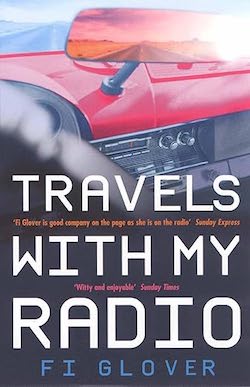
Fi Glover starts each day by tuning into the local radio station; it gives her a sense of being a part of the daily routine, no matter where she is.
The idea of basing a travel book on the radio came to her in northern California, where she was recording an episode of BBC’s The Travel Show.
Two DJs from KZST suggested she ask their listeners where the team should go. (They also told her about the Texan Lick cocktail and took her line dancing, but that’s another story.) Before long, listeners were calling in with suggestions—which is exactly what Glover loves about radio, the immediacy and the connection with people.
She decides to seek out some of the smaller stations, “the people who get phoned up about trailers and local barbeques”, stations with stories to tell.
There are over 350,000 radio stations in the world (and those are just the legal ones), more than 12,000 of which are in the United States. (The book was published in 2002 when internet radio was just catching on.) And so her travels begin.
In Vienna, Glover visits Blue Danube Radio, set up for the international community, whose offerings included English idioms for business travelers. She spends time with Radio Five Live, which has set up a temporary station in Charlesroi, Belgium, to broadcast to England fans during a Euro 2000 match. It’s a pretty low budget, in a room above a café: “A sea of wires and lights and little black boxes and empty fag packets and piles of paper and people”.
She gets a taste of life as a UN peacekeeper in southern Lebanon at Camp Shamrock radio, managed from a small hut in the sweltering heat. The station helps soldiers let off steam, keeping in mind that Hezbollah and Israeli soldiers—the two sides they’re trying to keep the peace between—can also tune in!
The US, with its vast array of radio stations, has something for everyone, whether you’re a conspiracy theorist or a Frank Sinatra fan. People pour out their insecurities, personal problems, and vent under the radio’s cloak of anonymity. Glover travels to New York, Las Vegas, Chicago, and Palm Springs, where she meets members of Dusty Wings, a group of retired air stewardesses, who answer all her questions about planes (no, they don’t use the oxygen masks to get over hangovers). In the UK, she is heartened by a program where local people speak about their lives.
But the cherry on the cake is Radio Montserrat. In 1997, the volcano on the island erupted, destroying homes and uprooting people. Radio Monserrat, with Rose Willock at its head, helped people through the crisis, providing regular updates. It shows radio at its best: a space where people could come together for comfort and advice. Even now, Rose says, “Each time the volcano sneezes, someone will call and tell us”.
Glover is a funny and informative companion. I think I would enjoy traveling with her—we share a love of hotels and a tendency to nick the freebies! I also learned a lot about radio, which is much needed now, when TV and video are so ubiquitous.
This review first appeared on Women on the Road.

 Women's Travel Books
Leave a comment