
Published by Crown, 2001, 320 pages
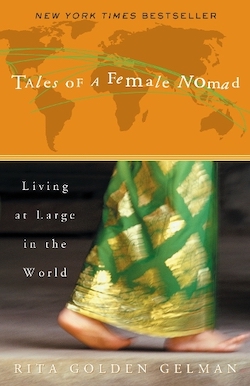
When her marriage starts to disintegrate, Rita Golden Gelman decides to go to Mexico on her own to take a break and think things through. Never having traveled on her own, she is nervous but willing to take a chance. And she finds that this is what she had been wanting to do all the time: travel, get to really know people and different cultures. The language barrier, as far as she is concerned, doesn’t exist if you really want to communicate.
Mexico is just the beginning. Her marriage finally breaks up, leaving her free to do exactly what she wants—her two children are adults and she supports herself by writing children’s books. She embraces her new life whole-heartedly, going to places where tourists seldom go: spending time in a Zapotec village in Mexico, staying with a Hassidic family in Israel, and visiting Nicaragua soon after the Sandinista revolution.
But Indonesia is the place that becomes her second home. On her first trip to the country, she goes to Bali where she meets Tu Aji and his family. She moves into a little guest house for a few months and ends up staying eight years, becoming part of the family. Tu Aji is a wise, thoughtful man who becomes her mentor, and she finds the spiritual dimension she had been searching for in her travels.
What I liked about Gelman is that she proves that it is never too late to take the plunge and go traveling. And a woman can have a fulfilling life without a man. All you need is a sense of adventure and a willingness to be surprised. But the biggest lesson I took away from this book was the kindness of strangers—Gelman takes people on faith and seems to be rarely disappointed. And that is an important lesson, especially in today’s troubled times.
This review first appeared on Women on the Road.

 Women's Travel Books
Leave a comment