
Published by Crown, 2004, 320 pages
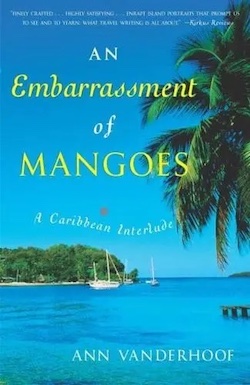
Imagine giving up your everyday life—the constant running against the clock, crazy working hours, cold grey winters—and sailing to the Caribbean. Something we all dream about in a sort of if-only way. But Ann Vanderhoof and her partner, Steve, did exactly that. She had her reservations—she had never set foot on a boat until her first date with Steve. She would have to give up her job: a difficult step for a woman who was defined by it. And how would they manage for money?
The hardest part, as Ann says, was the decision to go. Once they decide, they buy a sailboat, which they do up and christen Receta (Ann loves to cook). They go through the Intracoastal Waterway that runs along the sea on the US’s East Coast and then to the Bahamas, Grenada, and all the way down to Trinidad. They get to know some of the local people and fellow cruisers, some of whom become good friends. And they learn to rely on Herb—a volunteer living on Lake Ontario, who provides forecasts and guides boats through the Caribbean, every single day of the year, speaking to around 80 boats a day.
In the Bahamas, Christine Rolle, a tour guide, introduces them to the love vine, “for men with weak spines” that makes “Viagara seem like a Flintstone vitamin”. In the Dominican Republic, they eat “Silken avocados that dissolve like pale green butter on our tongues. Papayas the size of footballs, with honeyed flesh.” They fall in love with Grenada and its people and make some good friends, one of whom is Dingis. On their way back north, they stop to say hello and throw an impromptu birthday party for her daughter.
It’s not always smooth sailing. The hurricane season is approaching, so they need to sail to the Windward islands to get out of the way. Between the eastern tip of the Dominican Republic and the western tip of Puerto Rico lies the Mona Passage, where the ocean floor drops from 150 feet to 16,000 feet—the second deepest hole in the world. The waterfall this creates “sets up wild and conflicting currents”. Needs must, and they make the harrowing journey.
Ann Vanderhoof writes with humor and a lot of affection for the people they meet. The trip changes her—she feels much closer to nature and its rhythms and learns to let go and to “lime” or hang around. Not to mention becoming a seasoned sailor and an expert on rum. When they get back to Canada, you can feel the shock of the contrast between their life on the sea and their old lives: standing bemused in front of their storage space, they can’t understand what to do with all the stuff they had.
This is a journey of discovery, both of the region and its cultures, and also a personal one. And each chapter ends with at least one recipe (often more), which is one way of bringing the sunshine and blue seas into the readers’ homes.
This review first appeared on Women on the Road.

 Women's Travel Books
Leave a comment