
Published by Robert Hale, 2013, 206 pages
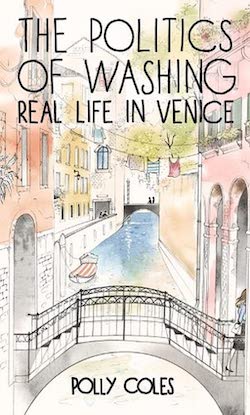
If you have ever wondered what it would be like to live in Venice, this book is for you. I read it on a trip to Venice, and it gave me a completely different perspective on the city.
Polly Coles moves to Venice from an English village with her Italian partner Alberto, a violin maker, and their four children. Living in Venice is unlike living anywhere else: there are no cars, and transport involves either a boat or, for the most part, your two legs. The city tends to flood if the tide is very high. And then there is the seemingly impenetrable bureaucracy.
However, in some ways, this is an older, more connected way of life. You cannot escape into the bubble of a car: you have to engage with the people you come across. There are no huge, impersonal supermarkets: the butcher and grocer not only know their products but also get to know their customers and their needs. When Coles buys an avocado, the grocer finds her one that would be ripe exactly at the right time.
Coles settles in and obviously loves Venice and its people. The city is a wonderful mix of the old and the new. “Here, in Alberto’s workshop, an antique craft was being pursued, but…the musicians who came in for repairs or to buy a new instrument were, of course, as modern as anybody anywhere. This was Venice at its best: a place of artisanal excellence, keeping alive ancient traditions and techniques for the modern world.”
She also writes with great empathy about immigrants. She hears the stories of women from Moldova, who have left their families to earn money to send back home. She writes about the African and Indonesian street vendors who manage to keep a safe distance from the law.
I enjoyed her observations, her sense of humor, and her worry about how far she should hang the washing on the line that runs between two apartments. (She decides on the halfway point so that the lady in the apartment opposite isn’t subjected to the indignity of sipping her morning coffee on her balcony with someone else’s boxer shorts flapping over her head.) The book is full of vignettes that build a picture of the real Venice.
But most of all, this book is a cri de coeur for the preservation of Venice as a living community, rather than as a romantic backdrop for the millions of tourists who have no real investment in the city. Shops that serve the community, like butchers and bakers, are being replaced by cheap souvenir shops, and Venetians are being pushed out of the city by the rising rents as landlords would rather rent apartments to tourists by the week. The result is that the kind of community that keeps a place alive is disappearing. And that is slowly killing this wonderful, unique city.
This review first appeared on Women on the Road.

 Women's Travel Books
Leave a comment